 5 Essential Greenwich Village Activities Plus Where to Eat
What do Andy Warhol, the Village People, and Jack Kerouac all have in common? They all cut their teeth in Greenwich Village, one…
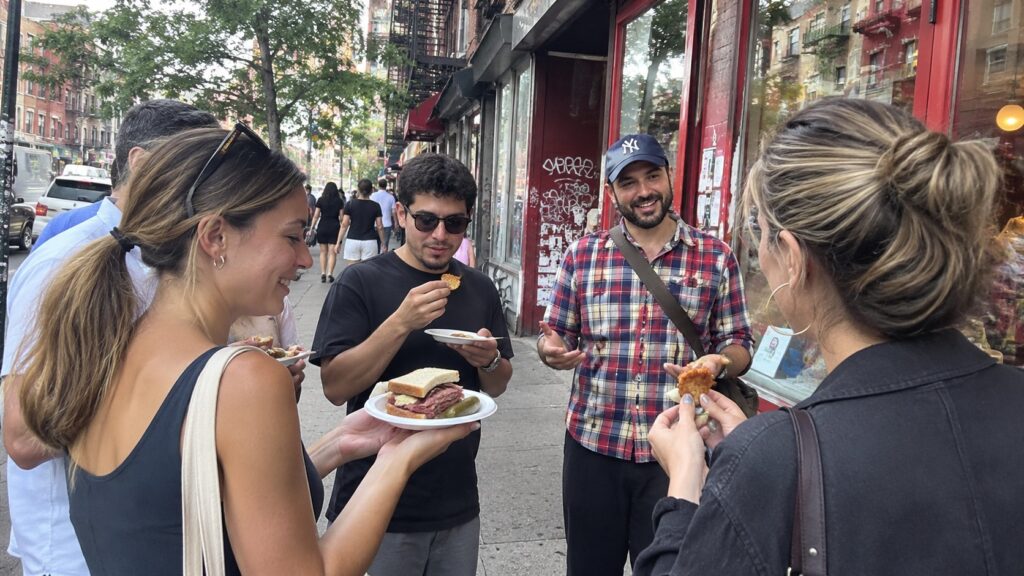
The Lower East Side is where New York learned to eat. A century ago it was the most crowded neighborhood in the world, packed with Jewish, Italian, Chinese and Eastern European immigrants who brought their recipes with them. Puerto Rican and Dominican families followed, and the food story kept growing.
Many of the shops they opened are still here, often run by the same families: delis hand-slicing pastrami since the 1800s, bakeries rolling knishes, and pickles sold straight from the barrel.
This Lower East Side food guide covers the 10 classic bites our local guides would tell a friend to try, where to find each one, and a few tips for eating like a New Yorker.
Jump to a food:
Short on time? Taste your way through six family-run Lower East Side institutions in one morning on our Lower East Side Food & History Tour, and skip the line at Katz’s Deli.
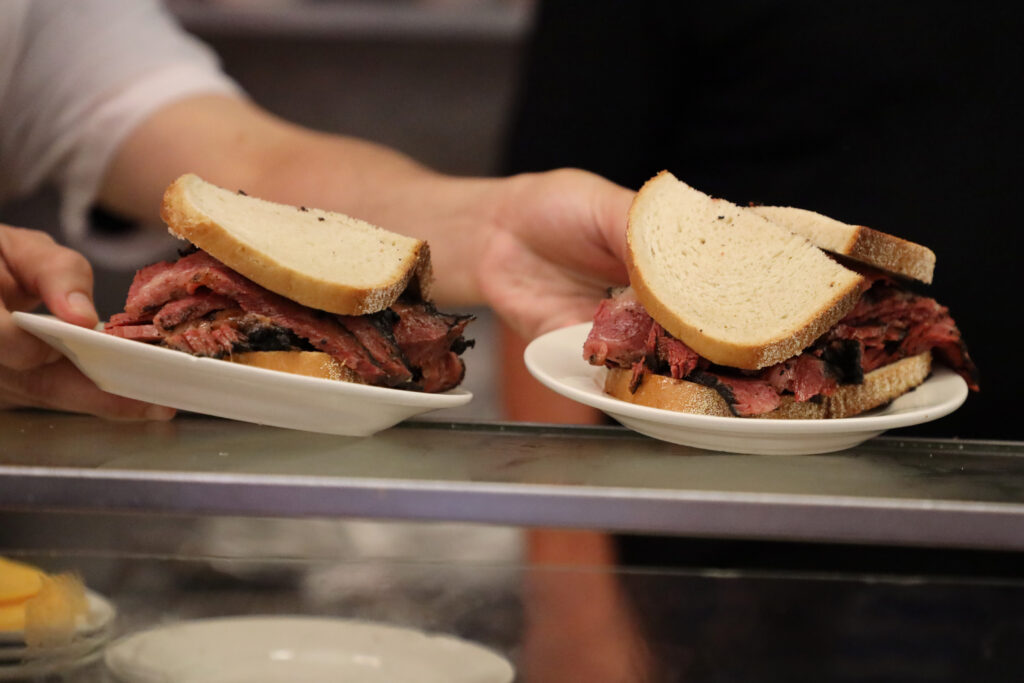
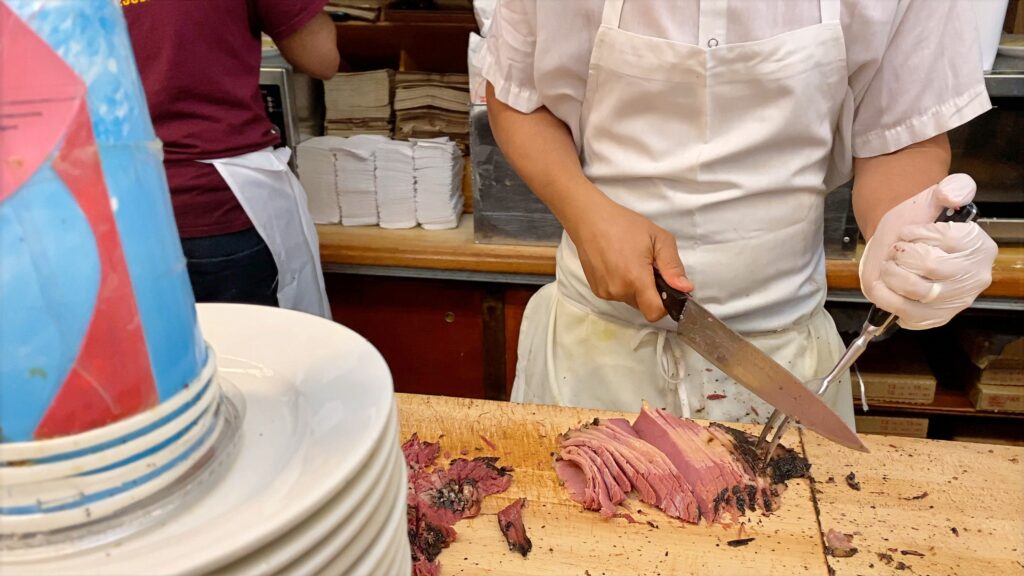
If you eat only one sandwich in New York, make it this one. Pastrami came to the city with Jewish immigrants from Romania and Eastern Europe. They cured, spiced and smoked beef brisket to make it last. Today it’s piled high on rye bread with a swipe of spicy brown mustard, and nothing else.
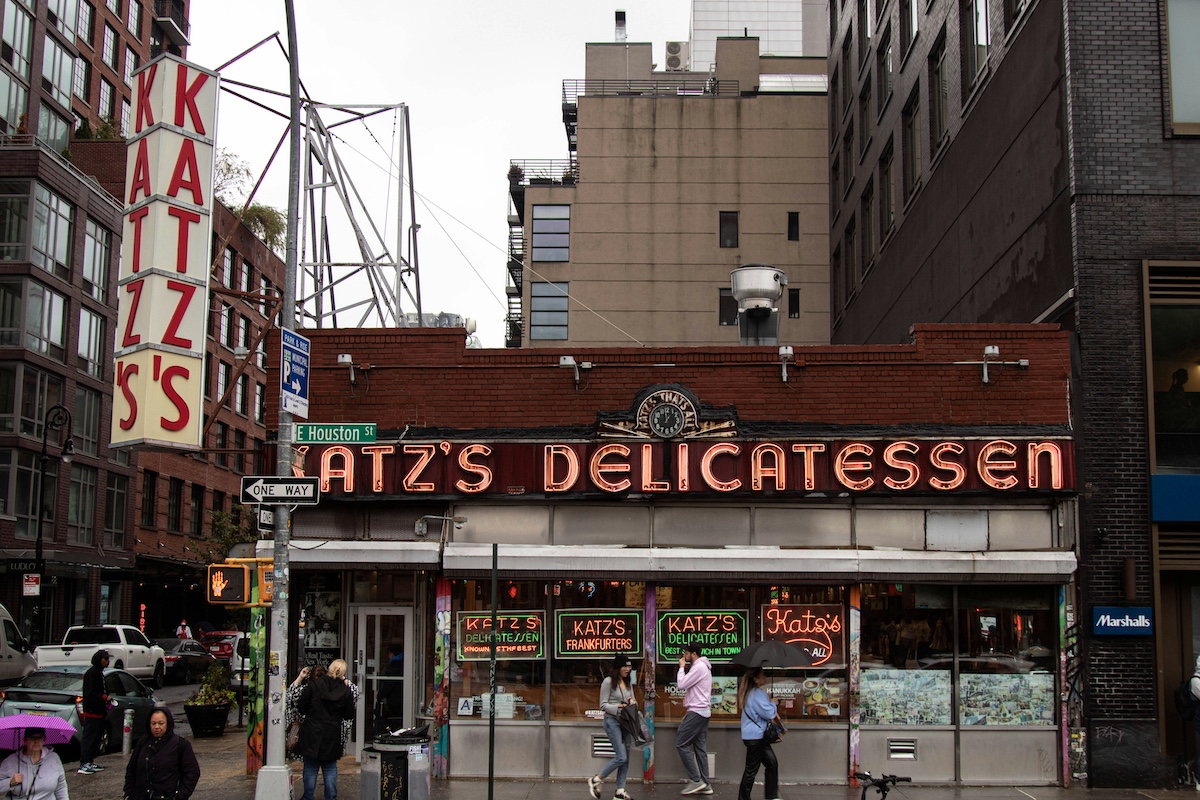
Where to eat it: Katz’s Delicatessen at 205 East Houston Street has been slicing pastrami by hand since 1888. It’s also where Harry met Sally. The catch is the line, which can stretch down the block on weekends.
Local tip: Hold on to the paper ticket you’re handed at the door. You need it to pay on the way out.
Skip the line at Katz’s. Our Lower East Side Food & History Tour starts at Katz’s with hand-carved pastrami and latkes. There’s no waiting in line. Then you’ll go on to five more family-run institutions.
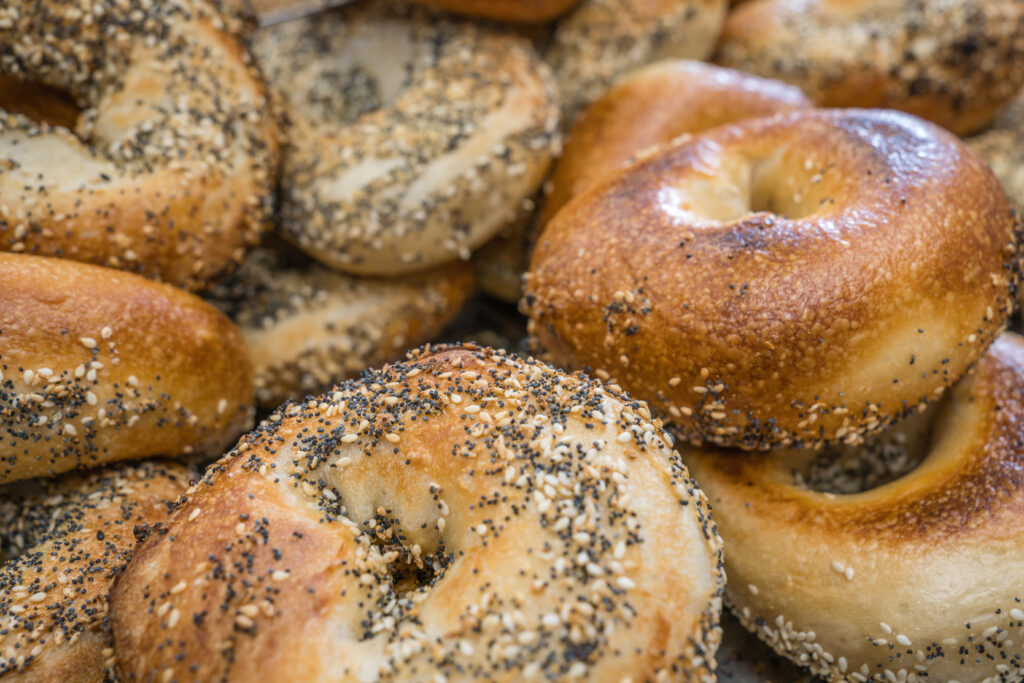
A real New York bagel is boiled before it’s baked. That gives it a shiny, chewy crust and a dense middle. Eastern European Jewish bakers brought bagels to the Lower East Side in the late 1800s. New Yorkers will tell you the city’s water is the secret.
Order it “with a schmear” (cream cheese). Or go all in with lox, capers, tomato and red onion. Asking for it toasted is a debate you probably don’t want to start.
Where to eat it: Russ & Daughters on East Houston Street, family-run since 1914, is the city’s most famous “appetizing” shop, where smoked fish is the main event. For a sit-down version, Russ & Daughters Cafe is around the corner on Orchard Street.
Make your own. Learn to roll, boil and bake real New York bagels from scratch at this NYC Bagel Brunch class. It’s held at a family-run Manhattan bakery and ends with a sit-down brunch.
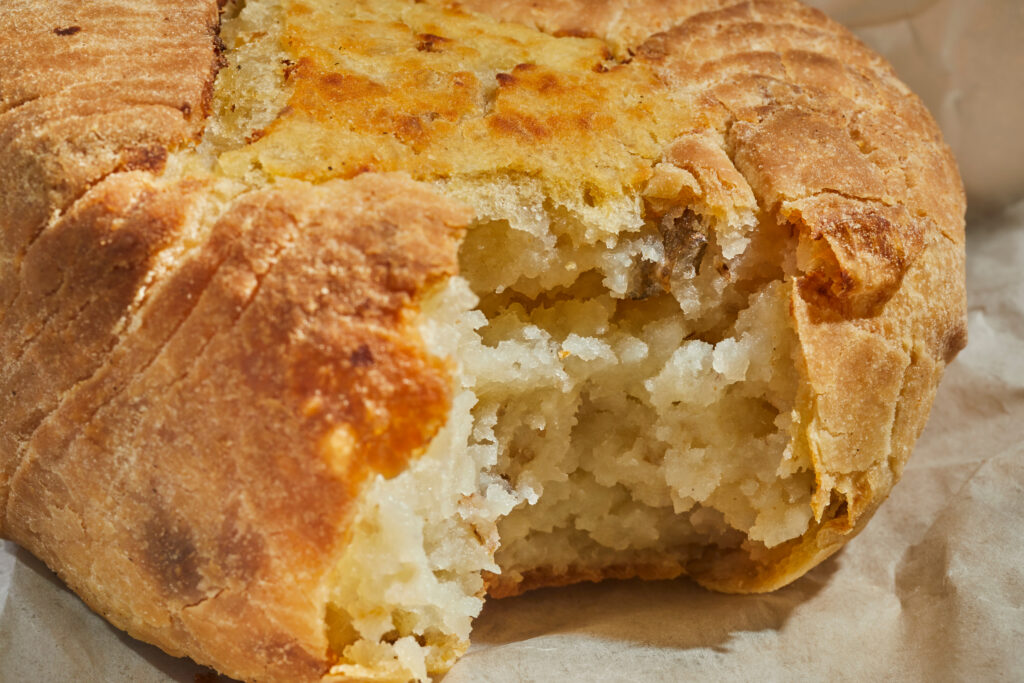
A knish is a pillow of dough stuffed with mashed potato, kasha or other fillings, then baked or fried. It was cheap, filling street food for Lower East Side workers in the early 1900s.
Where to eat it: Yonah Schimmel Knish Bakery on East Houston Street, open since 1910, still bakes them round, the old-fashioned way. It’s a five-minute walk from Katz’s.
The Lower East Side once had dozens of pickle vendors selling from street-side barrels. Half-sours are crisp and bright green. Full sours are tangy and deeper green. Every deli serves them on the side, free.
Where to eat it: The Pickle Guys on Grand Street still sell from barrels, plus pickled tomatoes, peppers and pineapple.
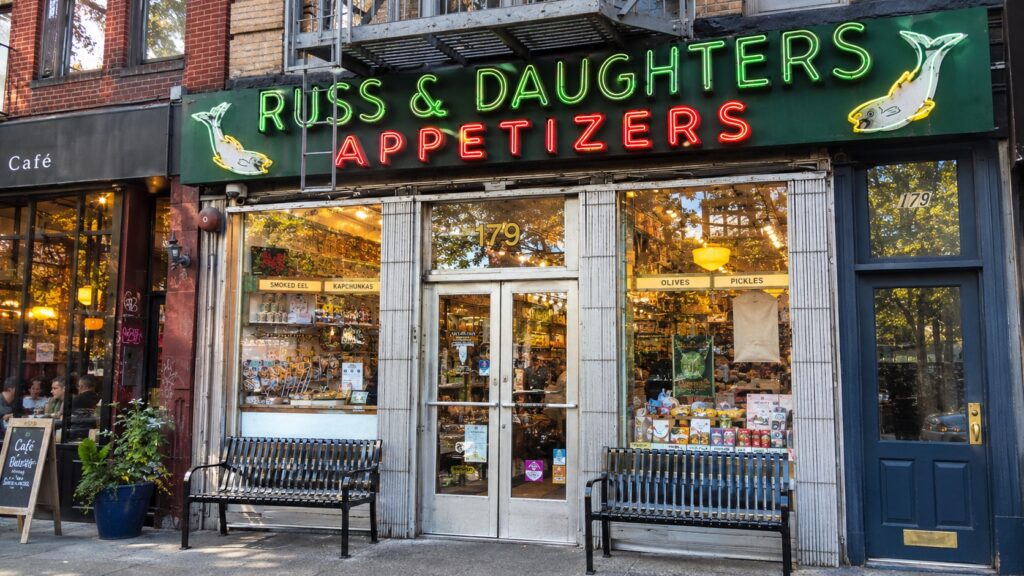
Small crescent-shaped pastries made with a cream-cheese dough and rolled around chocolate, cinnamon, jam or nuts. They’re a staple of Jewish bakeries across the city.
Where to eat it: Russ & Daughters, a short walk from Katz’s. While you’re there, grab a slice of chocolate babka too.
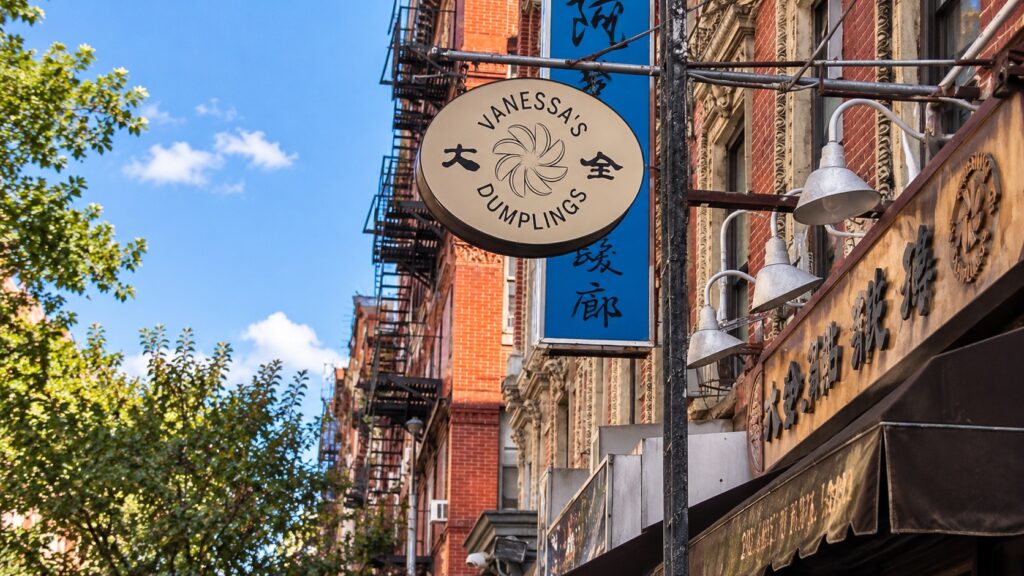
Chinatown runs right into the Lower East Side along Eldridge and Division streets. Pan-fried pork-and-chive dumplings, often five for a few dollars, are one of the best-value meals in the city.
Where to eat it: Vanessa’s Dumpling House, a family-run shop known for its handmade dumplings and sesame pancake sandwiches. Prosperity Dumpling and Nom Wah Tea Parlor are other favorites.
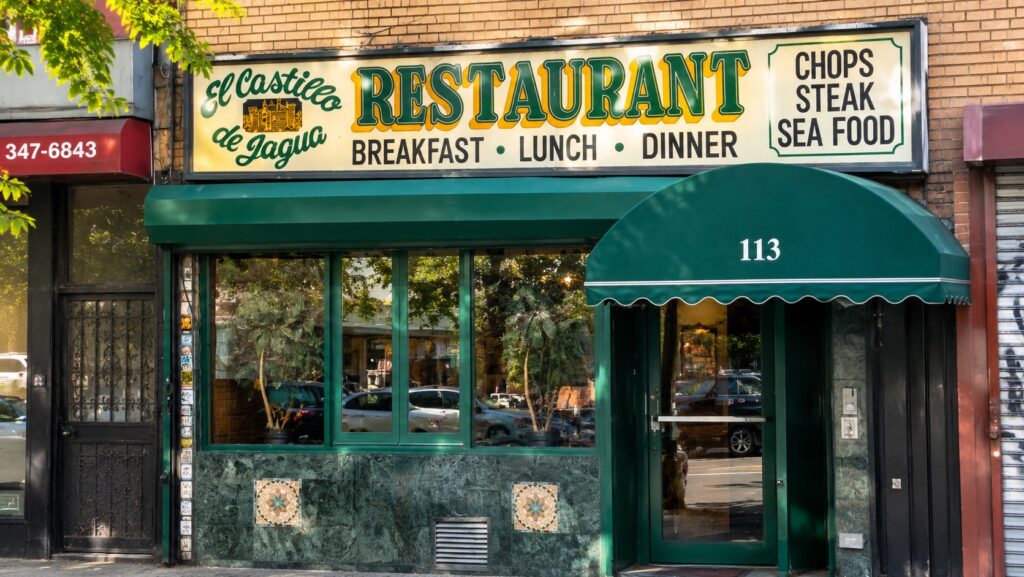
New York has one of the largest Dominican communities in the world. The Lower East Side’s Latino families left their mark too. Pastel en hoja is a savory dough of green plantain and root vegetables, filled with seasoned meat and steamed in a banana leaf. It’s a holiday favorite.
Where to eat it: El Castillo de Jagua on Rivington Street, a Lower East Side institution for about 50 years.
Taste it with the families who made it famous. On our Lower East Side Food & History Tour, you’ll try pastel en hoja at El Castillo de Jagua, dumplings at Vanessa’s, rugelach at Russ & Daughters and more.
Essex Market has fed the neighborhood since 1940, when Mayor Fiorello La Guardia moved the pushcart vendors indoors. Today it fills a bright building at Delancey and Essex streets, with dozens of vendors under one roof.
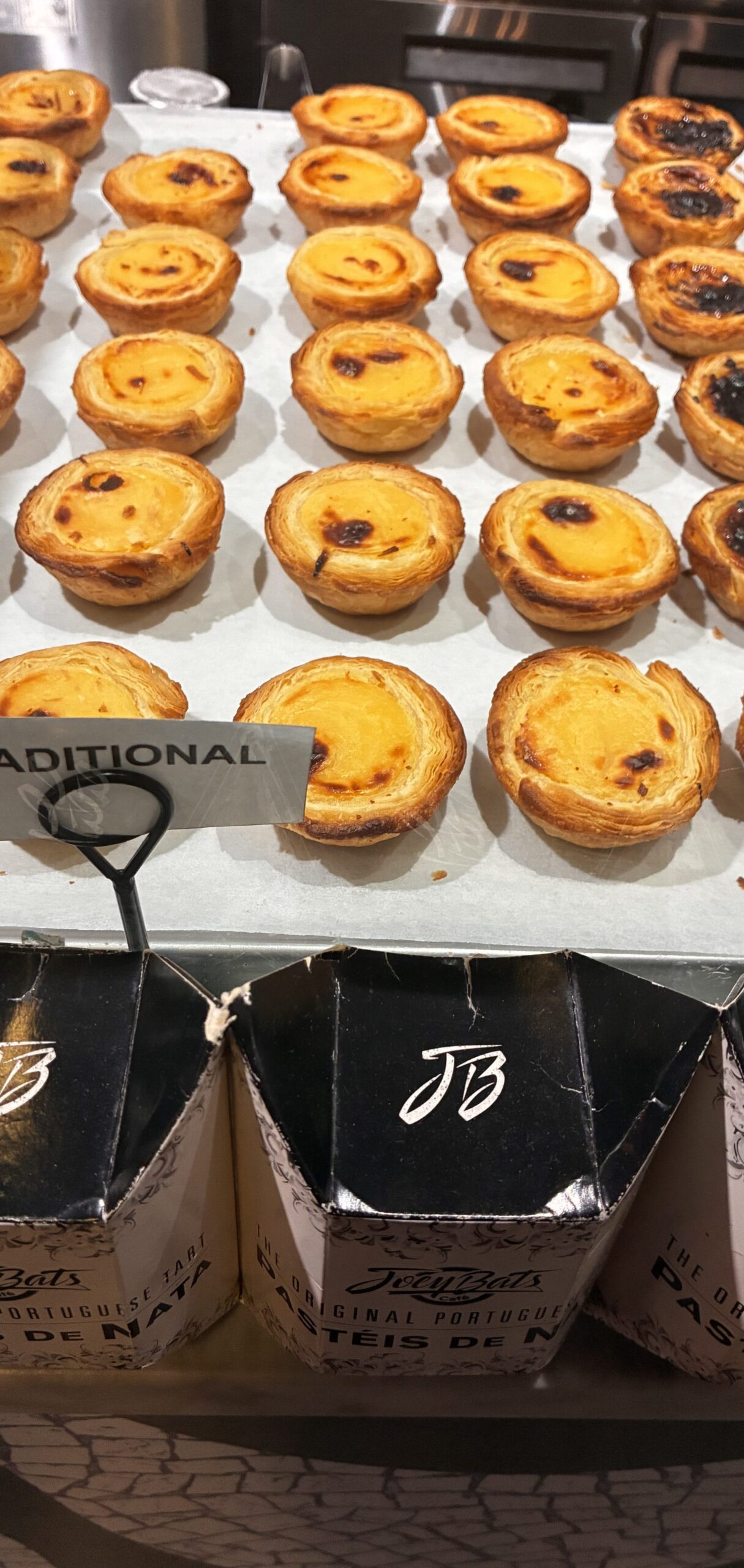
One standout is the Portuguese custard tart, or pastel de nata: flaky pastry, a creamy center and a caramelized top. Eat it warm.
Where to eat it: Joey Bats Café inside Essex Market. Take a lap around the market while you’re there for cheese, coffee, tacos and more.
The Lower East Side has a serious sweet tooth. Economy Candy has been selling sweets on Rivington Street since 1937. Floor-to-ceiling shelves hold everything from chocolate bars and gummies to retro candy you haven’t seen since childhood. Look for halvah, the sesame candy that’s been a neighborhood favorite for generations.
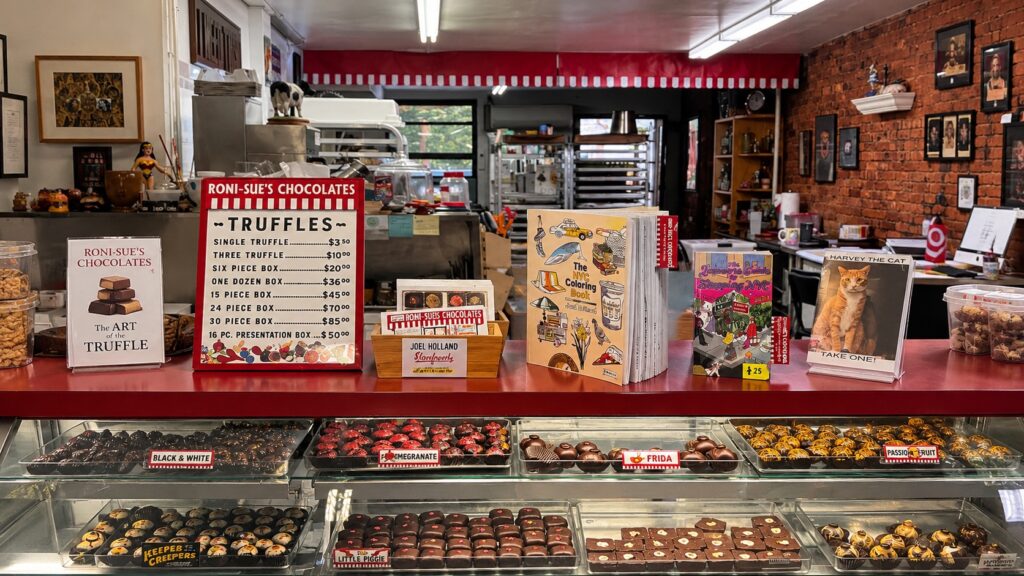
For something more refined, Roni-Sue’s Chocolates is a small local chocolatier known for its handmade truffles. Few visitors know about it, and it’s one of the favorite tastings on our Lower East Side Food & History Tour.
Where to find them: Economy Candy is at 108 Rivington Street. The easiest way to try Roni-Sue’s truffles is on our Lower East Side food tour, alongside five more family-run stops.
Walk 10 minutes west and you’re in Little Italy and Nolita, home to Lombardi’s, widely credited as America’s first licensed pizzeria (1905). A New York slice is thin, wide and crisp underneath, made to be folded in half and eaten on the move.
Where to eat it: Scarr’s Pizza on Orchard Street, right on the Lower East Side, Lombardi’s on Spring Street, and Prince Street Pizza for a square slice. Visiting in September? Don’t miss the Feast of San Gennaro in Little Italy.
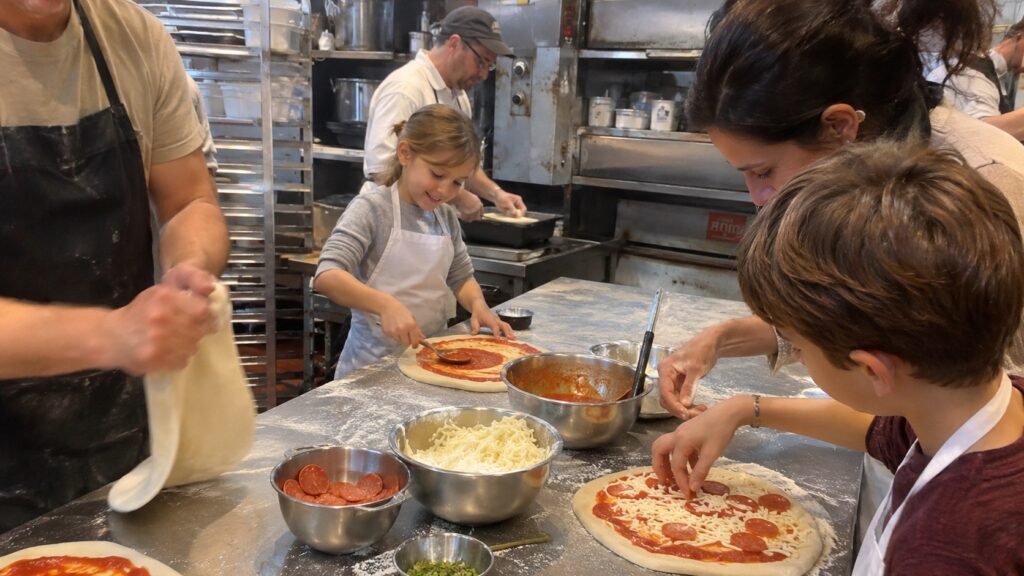
Become a slice expert. At our New York Slice School, you’ll stretch your own dough and top a New York-style pie in a family-run Manhattan bakery. Then it’s pizza party time.
Every stop in this guide is within about a 15-minute walk, so you can taste a lot of the neighborhood in a single morning.
The easiest way to do it is with someone who knows the stories behind each bite. On our NYC Lower East Side Food & History Tour, a local guide takes you to six family-run institutions in 2.5 hours:
Tours run Friday to Sunday at 11 AM, with up to 15 guests. Come hungry: there’s enough food to count as lunch. Prefer your own group? The tour is also available as a private experience for up to 12 guests.
NEW · SKIP THE LINE AT KATZ’S
Eat Your Way Through the Lower East Side
Skip the line for pastrami at Katz’s, then taste your way through five more family-run spots with a local guide.
✔ 2.5 hours · ✔ 6 tastings · ✔ Free cancellation
Bring New York’s food traditions home with a hands-on class at a family-run Manhattan bakery that’s been part of the city’s baking scene since 1991:
Exploring beyond the Lower East Side? See our guide to 10 iconic NYC foods and where to order them all over the city.
Jewish deli classics: pastrami, bagels and lox, knishes, sour pickles and rugelach. You’ll also find Chinese dumplings and Dominican dishes from the communities that settled here later.
For a first visit, go to Katz’s Delicatessen for pastrami, Russ & Daughters for bagels and lox, Yonah Schimmel for knishes and Essex Market for a bit of everything.
On weekends and at lunchtime the line often stretches down the block and can take an hour or more. Go early on a weekday, or join a tour that includes skip-the-line access.
Yes, if you’re a first-time visitor. The hand-carved pastrami is the benchmark for the sandwich, and the dining room is a piece of New York history. Pastrami portions are large, so plan to share.
Yes. It’s an easy, weatherproof stop with dozens of vendors under one roof, and a good place to graze if your group can’t agree on what to eat.
It is if you want to try many classics without planning a route or waiting in lines. Our Lower East Side Food & History Tour covers six family-run stops in 2.5 hours, with enough tastings to replace lunch.
Chinatown, Little Italy, Nolita and the East Village are all within walking distance, so it’s easy to combine the Lower East Side with a walk through neighboring areas.
5 Essential Greenwich Village Activities Plus Where to Eat
What do Andy Warhol, the Village People, and Jack Kerouac all have in common? They all cut their teeth in Greenwich Village, one…
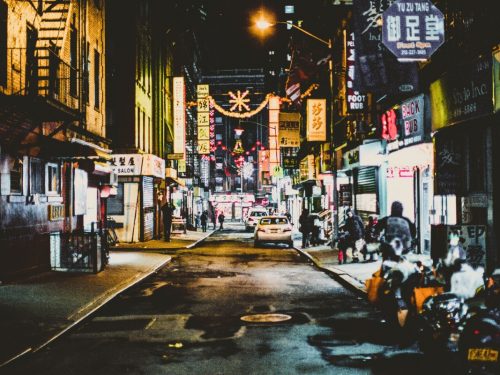 A Cruise Down Canal Street in New York City’s Chinatown
Chinatown is a must-see for any trip to New York City. It’s rich in history, and it’s a gateway to Little Italy and…
 12 Attractions You Must Not Miss in NYC
So you’re ready to explore New York! Whether you’re planning for a weekend or you’ve been here for years, there’s so much to…